Tag Archives: Biology

Where Do New Primate Species Come From?

A Quick Refresher of Species Concepts: 1. Biological Species Concept (Mayr) A species = “A group of actually or potentially interbreeding natural populations which are reproductively isolated from other such groups” (Source) Advantages: – Objective, testable criteria Disadvantages: – Applies to only sexually-reproducing species – Hard to test for populations that don’t overlap (i.e. islands) – Messy when species hybridize

Read more
ANIMALS THAT NEED OUR HELP: Olive Ridley Sea Turtle

Olive Ridley Sea Turtle Lepidochelys olivacea Taxonomy Kingdom: Animalia Phylum: Chordata Class: Reptilia Order: Testudines Family: Cheloniidae Genus: Lepidochelys Species: L. olivacea Overview An adult Olive Ridley Sea Turtle weighs around 100 pounds and is 22-31 inches long, while hatchlings weigh less than 1 ounce and are on average 1.5 inches long (NOAA, 2014). They spend most of their time at

Read more

New Course Offering: Neotropical Bat Biology

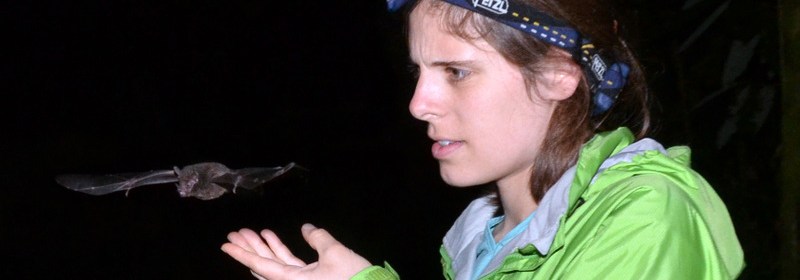
DANTA is delighted to announce a new course offering for winter 2016! Neotropical Bat Biology will be held from January 1-15, 2016 at Osa Conservation‘s Piro Research Station in Costa Rica’s spectacular Osa peninsula. As the one of the largest tracts of rain forest north of the Amazon (roughly 400,000 acres in the Osa Conservation Area), it is renowned for high species

Read more

Elephant Tourism: Harmful and Un-harmful Tricks

by Lisa Barrett In a previous blog post, I wrote about how Asian elephants are endangered and that there are only about 3,000 left in the wild. I discussed how, in reality, the best way to conserve them is through education about conserving (and mitigating the decline) of extant populations while giving current captive populations the best life possible. In

Read more

Dichogama colotha: a lovely Costa Rican moth

         Dichogama colotha is a species of moth found in Costa Rica, Mexico, Puerto Rico, and southern Texas. A description of this little known species was first published in the Proceedings of the United States National Museum in 1912. D. colotha is a relatively small moth with white, almost iridescent wings that span 28-36mm, and tends to fly from June to October (Dyar

Read more

Accessories to the crime

Enclosure accessories which increase natural behaviors in your pets fall under the large umbrella term called enrichment. Enrichment can also be changes in routines, new food items or rearrangement of cage furniture. When you first give an animal a new enrichment device, observing their interaction is essential. After the initial observation, revisions can be made to the enrichment item to

Read more

To Save a Jaguar

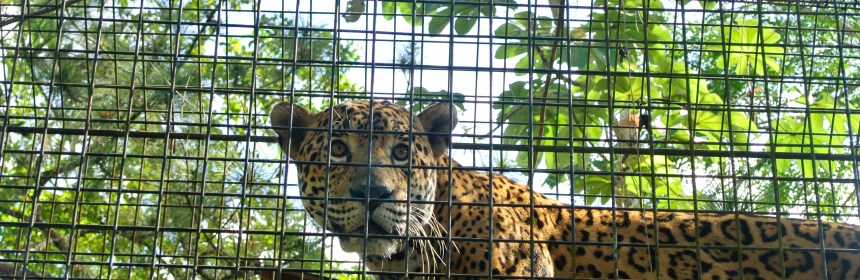
This winter I went to Belize with 11 classmates and 5 veterinarians, where we spent a week providing care for the animals at The Belize Zoo (TBZ). A small, charming zoo integrated almost seamlessly into the tropical savanna, TBZ is probably better defined as a sanctuary- all of its animals are local species and are “rescues” in one way or

Read more

Awaiting Baby Sahm’s Arrival

by Lisa Barrett No Breeding, No Buying At about this time last year, I, along with the rest of the Think Elephants International (TEI) research team, was anxiously awaiting the arrival of a new “family” member. Elephant births are cause for huge excitement at the camp for two reasons. First, female Asian elephants only have four to five calves in

Read more

Island Biogeography – Madagascar

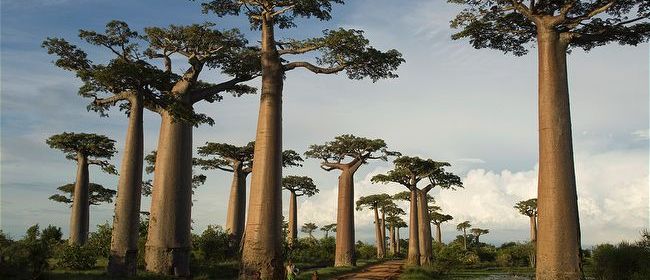
The island of Madagascar began to split from continental Africa during the Jurassic period, approximately 135 million years ago! By 70 million years ago, it was completely separated from the continent. This separation has allowed for extensive amounts of adaptive radiation. This is a process in which organisms diversify rapidly into a multitude of new forms that can exploit different environmental

Read more

Getting to the Bottom of Baboon Bottoms

I have received some interesting reactions when I tell new acquaintances that I study baboons. Recently, someone very enthusiastically asked, “Those are the animals with the HUGE pink butts, right?” They are indeed. And I’m actually quite intrigued by those “pink butts.”   A more technical term for this is “exaggerated sexual swellings.” Around the time of ovulation, females of

Read more
« Older Entries Recent Entries »