
DANTA TROPICAL BIOLOGY AND CONSERVATION FIELD COURSES 2026
Each year DANTA offers a number of training courses in various aspects of tropical biology. The courses are intended for undergraduates or early graduate level students who have a keen interest in tropical biology and conservation but have little or no experience of working in a tropical environment. Non-students are also welcome to participate.
For more information, please visit our website and/or contact us at conservation@danta.email.
Wildlife Conservation and Sustainability
Dates: December 28- January 12, 2026, and July 1-16, 2026
Program Fee: $3100
Application deadline: December 1, 2025
Course Description:
This course is designed to provide students with field experience, on a range of terrestrial surveying techniques, measuring bio-indicator species: mainly key predators and their prey and butterflies. Students will also gain a a better understanding on the principles of defaunation, sustainable development, and community management and its conservation related issues. The course includes four learning experiences categories: field exercises, seminars, lectures, and applied conservation.
The field exercises and seminars offer instruction and experience on direct and indirect methods of biodiversity data collection, management, and analysis, as well as GPS navigation and research project development. Direct methods include butterfly trapping while indirect methods comprise mammal tracking, or camera trapping. Lectures cover ecology and socio-economic and anthropogenic impacts related to selected bio-indicator groups in the Neotropics, with a particularly in the Osa Peninsula. Selected lecture topics include ecology, taxonomy, and conservation of medium-large vertebrates and butterflies, as well as effects of anthropogenic impacts on population dynamics or defaunation. Topics on community-based management, participatory methods, and socio-economic effects on both conservation and the development of sustainable livelihoods for local communities are also included. Students also gain experience in community outreach and education through involvement in an activity at the Piro Ranch involving Don Miguel Sanchez, one of the remaining few landowners in the area.

Neotropical Bat Biology
Dates: June 15-30, 2026
Program fee: $3100
Application deadline: May 1, 2026
Costa Rica is home to more than 100 species of bats, which play a wide variety of important ecological roles in tropical systems, including fruit and nectar bats important to plants, predators of insects and invertebrates, and vampire bats. Students will experience the great diversity of Neotropical bats by capturing them with mist nets, which allows for careful identification and study of bats in-hand. Possible additional projects include roost and diet surveys, diversity comparisons across field sites, examination of ectoparasites, studies of flight anatomy, and opportunities for bat photography.
Methods in Primate Behavior and Conservation
Dates: June 15-30, 2026
Program fee: $3100
Application deadline: May 1, 2026
This two-week course is designed to provide students with field experience in primate behavior, ecology, and conservation. Learning experiences fall into four main categories: field exercises, seminars, lectures, and applied conservation. The field exercises and seminars provide instruction and experience in: (1) methods of measuring environmental variables, including assessment of resource availability, (2) methods of collecting and analyzing the behavior of free-ranging primates, (3) assessments of biodiversity and (4) techniques for estimating population size. Lecture topics will cover the behavior and ecology of Old and New World primates from an evolutionary perspective. Selected lecture topics include primate sociality, feeding ecology, taxonomy, rain forest ecosystems and conservation. Service learning is a large component of all our programs. Students will gain experience in applied conservation through participation in Osa Conservation’s reforestation, sustainable agriculture and wildlife monitoring programs (big cat and sea turtle).
Field Excursion
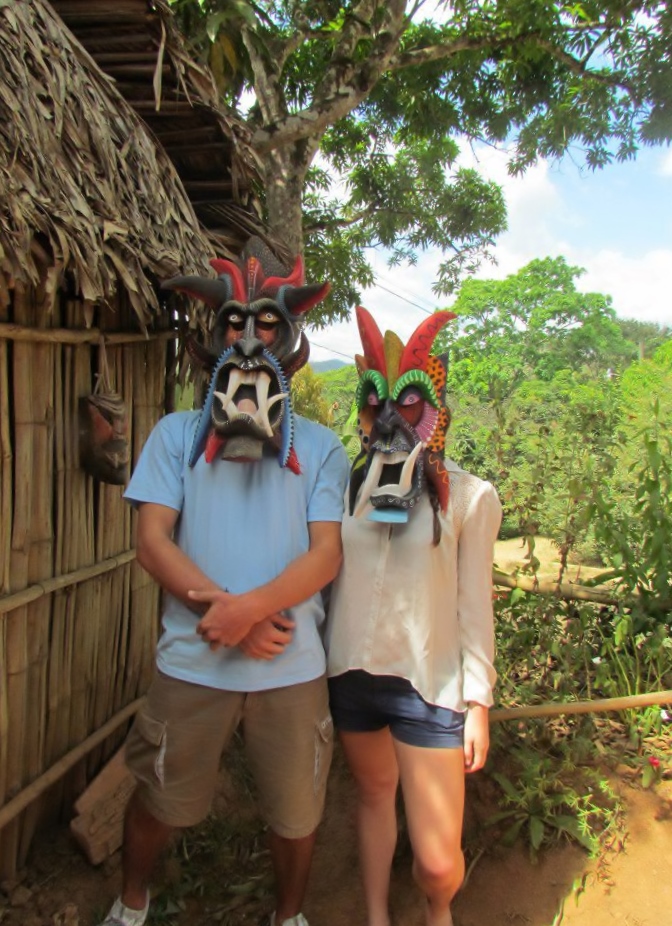
All courses include a visit to a wildlife rehabilitation center, sustainable chocolate plantation and dolphin and snorkeling trip of the Golfo Dulce. We overnight on the Boruca Indigenous Reserve where we will learn about the community and their traditional lifeways and help with needed projects. Every effort is made to implement eco-friendly and socially responsible practices into our day-to-day operations, field courses and overall mission.
Enrollment in each course is limited to 15 students. The course is open to both credit and non-credit seeking students. University credit can be arranged through your home institution.
 DANTAisms